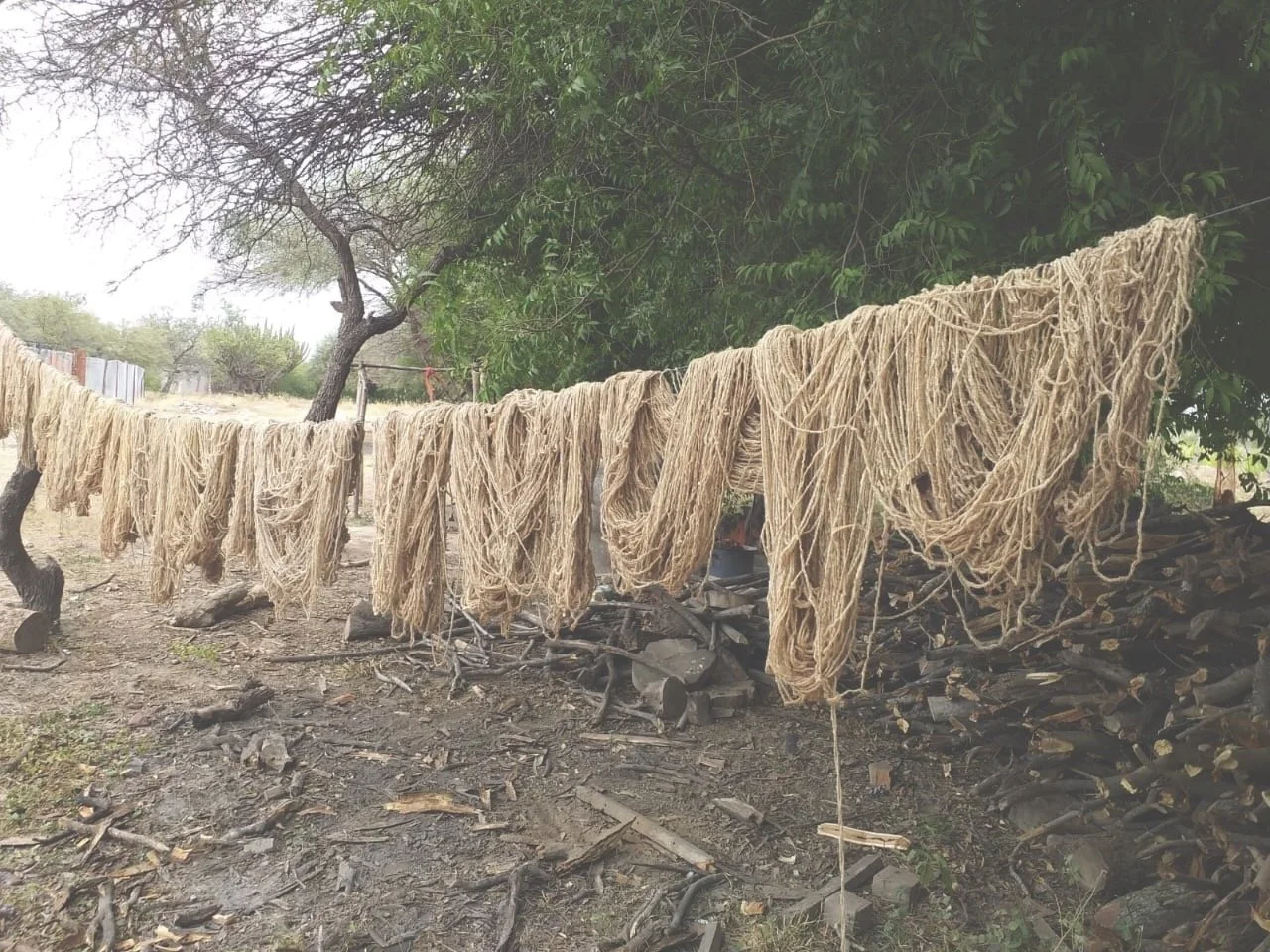

Hidden in the heart of el monte santiagueño—in the remote parajes of Majada Sud and Monte Redondo—groups of women gather to weave not just textiles, but living expressions of memory, landscape, and identity.
Our Rugs
Ready To Ship
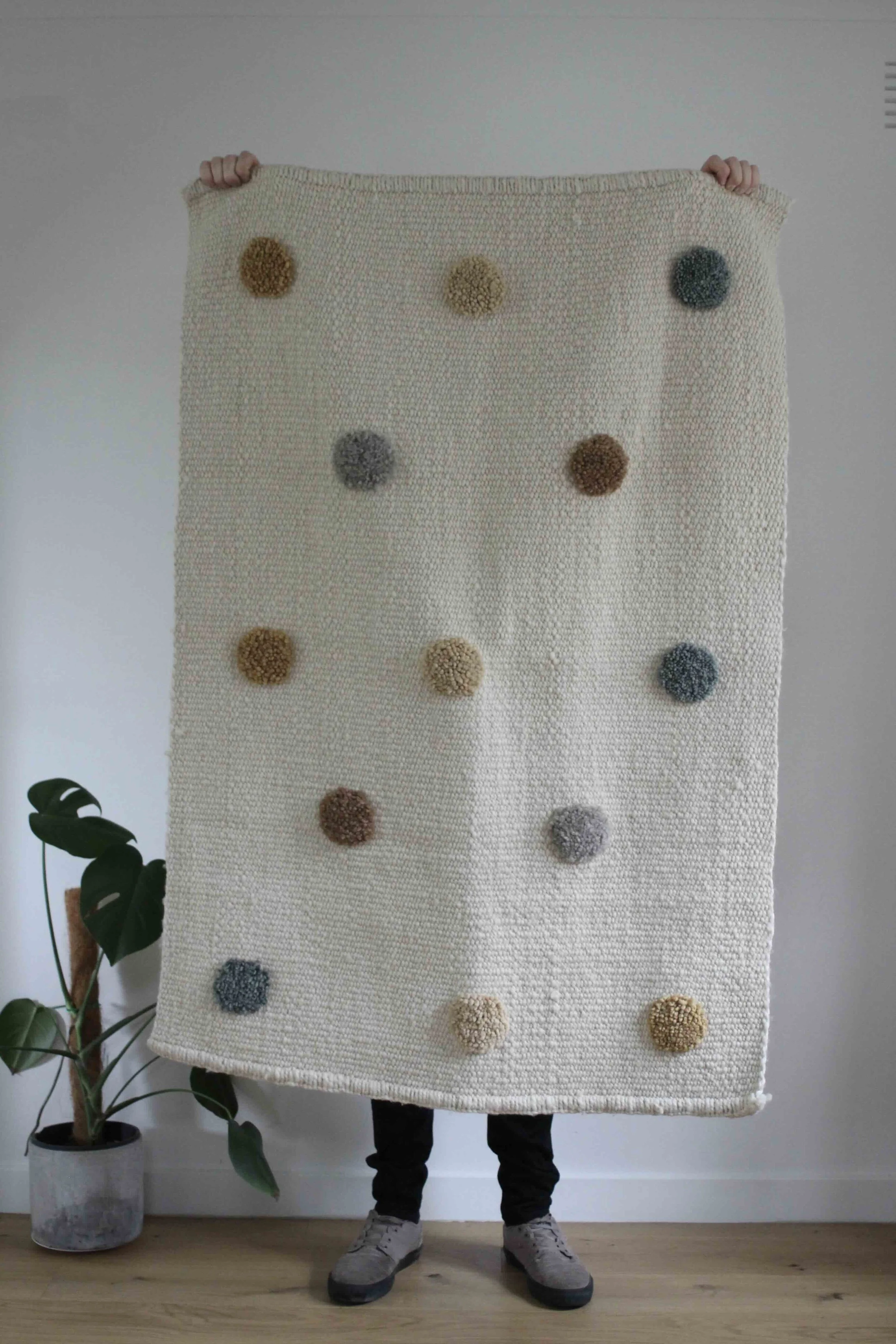
100 × 150 cm approx.
Small
Flor de Lana – Tika
The Flor de Lana collection explores soft textures and decorative details, celebrating the expressive side of traditional weaving.
Tika is a joyful piece adorned with colourful pompons — playful, warm, and full of character.
100% sheep wool
Hand-spun and handwoven on a traditional loom. Naturally dyed using plant-based pigments.
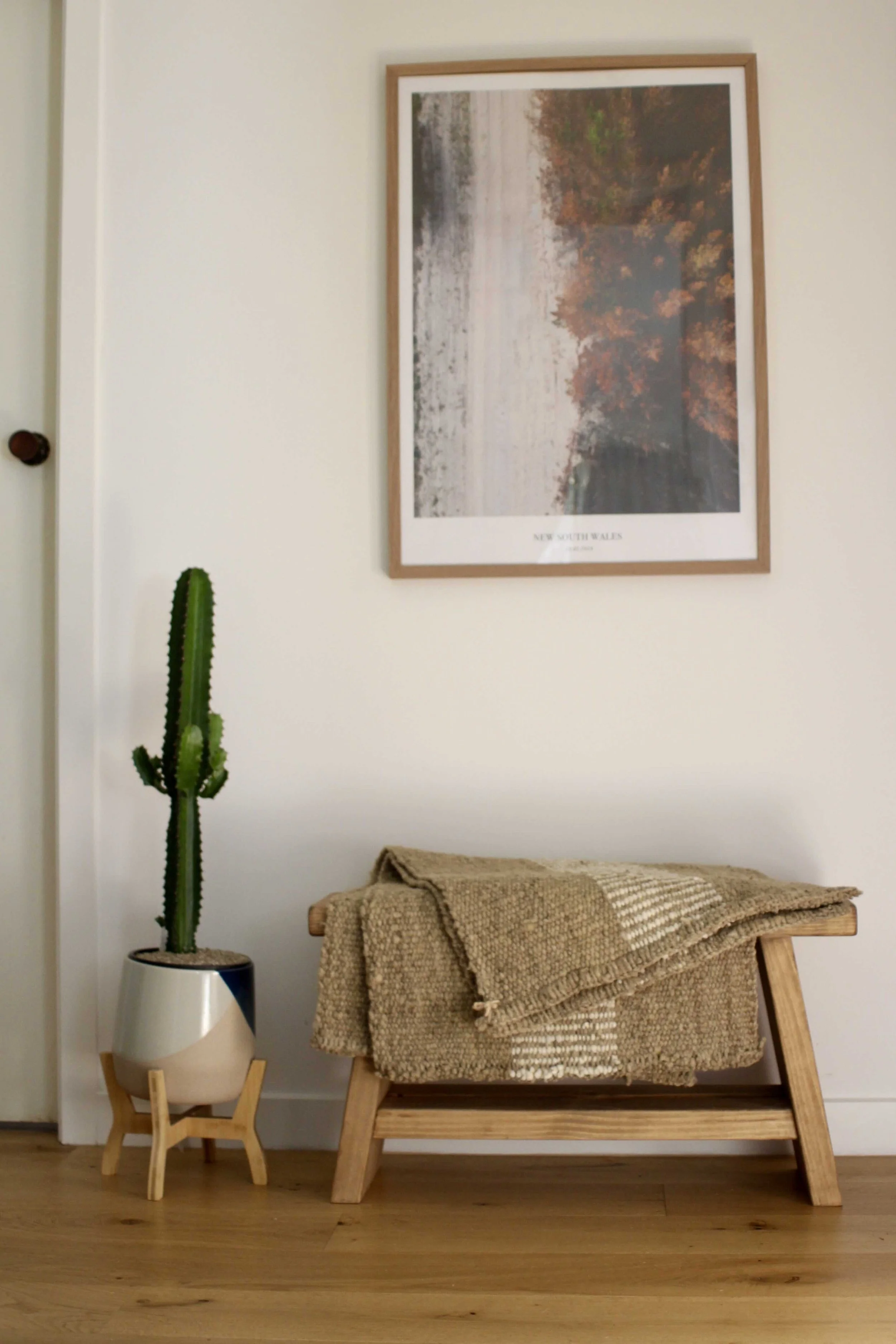
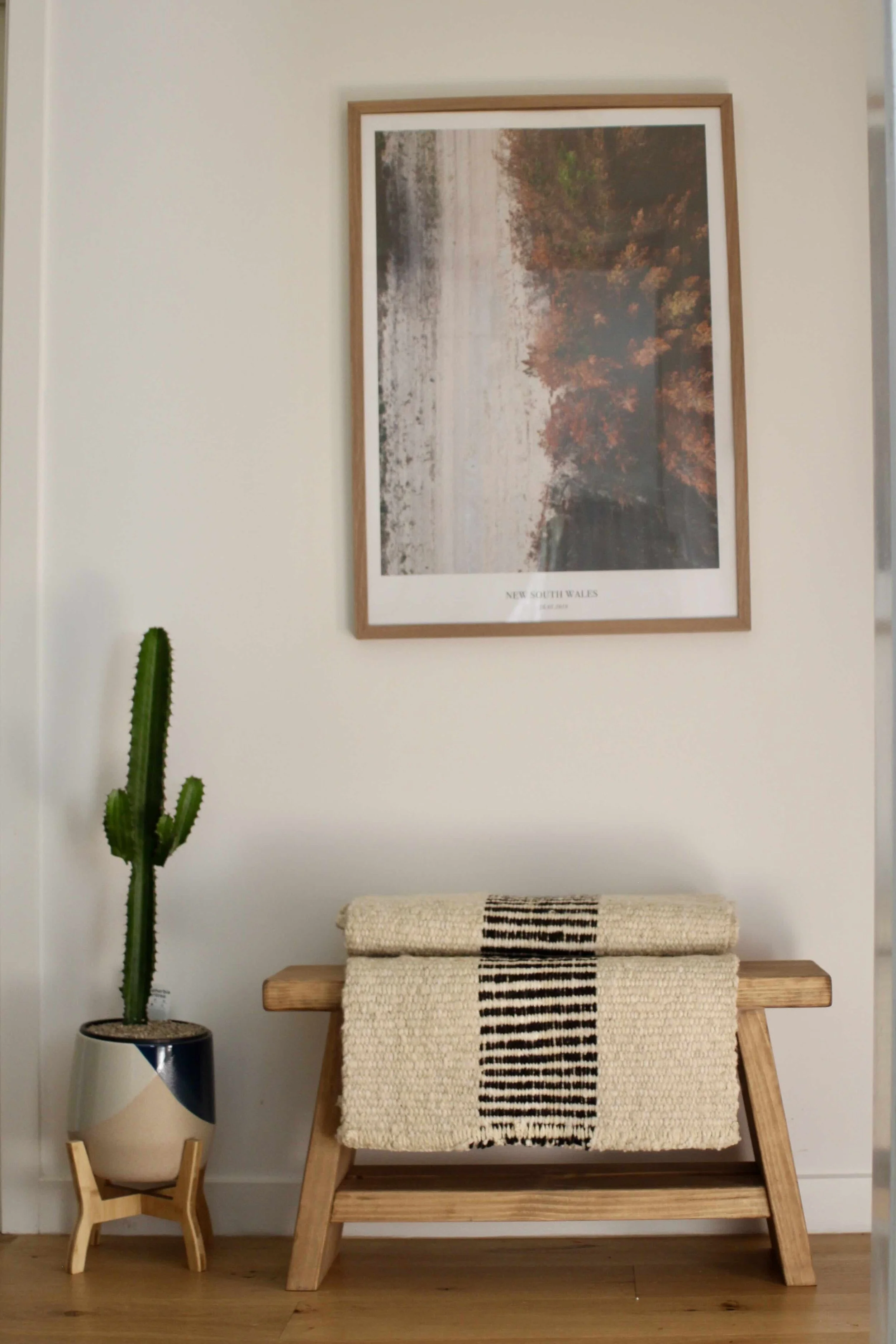
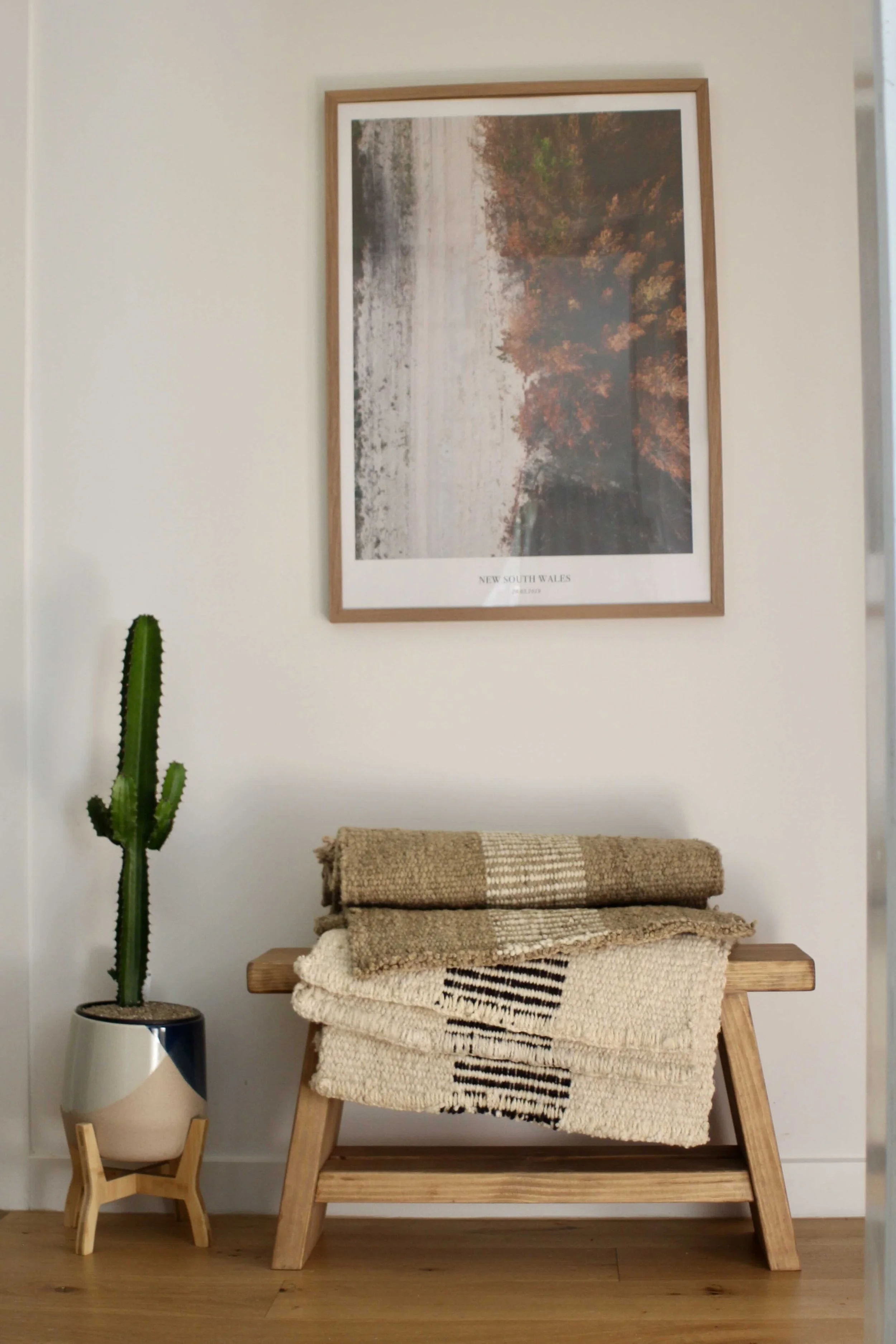
50 × 100 cm approx.
2 x Bedside Rugs
The “Maya” collection means night or rest in Quechua — a name that evokes peaceful rituals and quiet mornings.
Soft wool rugs designed to frame the bed with calm and warmth.
100% sheep wool
Hand-spun and handwoven on a traditional loom. Naturally dyed using plant-based pigments.
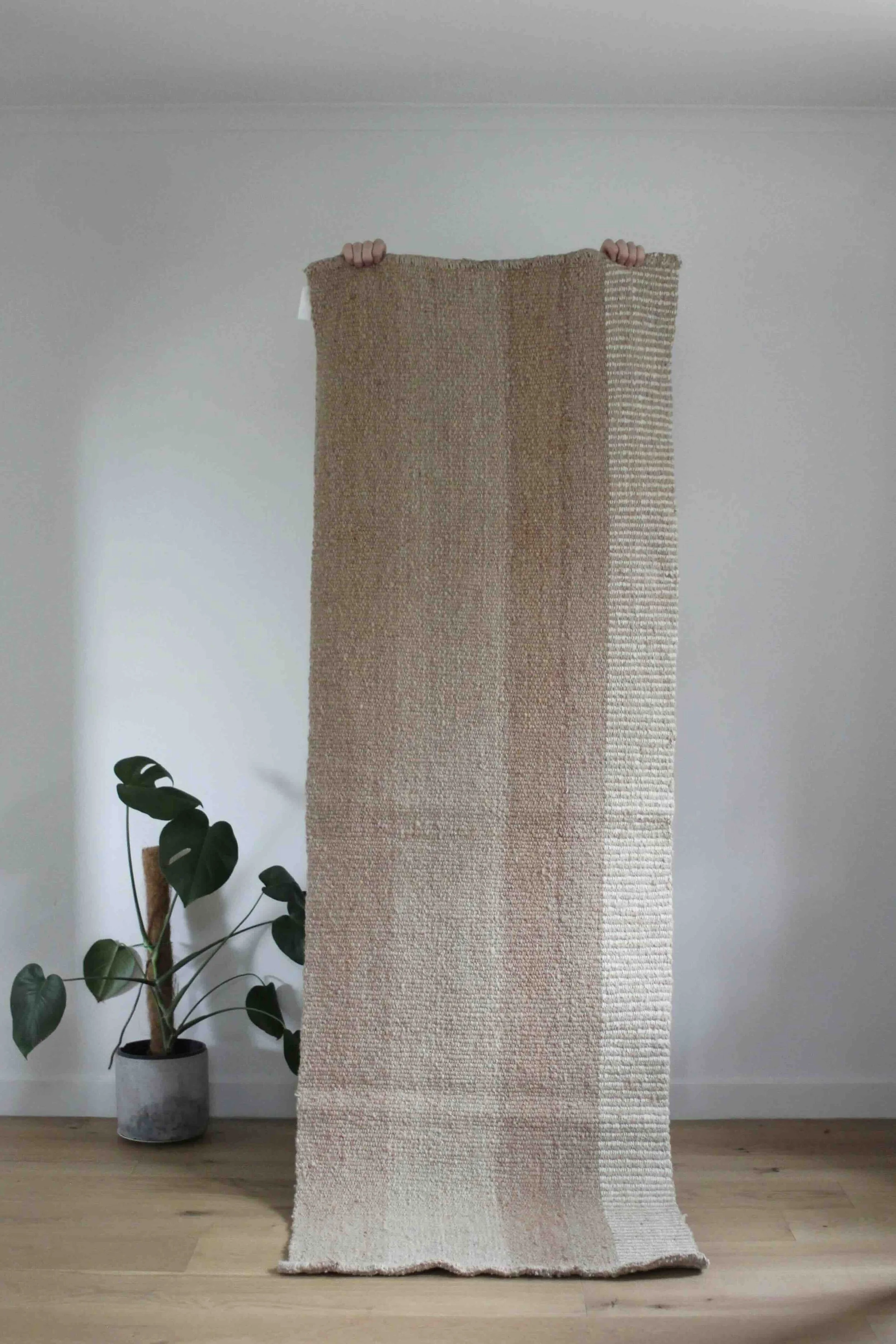
80 × 2020 cm approx.
Hallway Rug - Runner - Natural tones
The Sendero collection embodies the idea of a ‘path’—featuring long rugs with a strong presence, ideal for enhancing transitional spaces.
Natural carded wool with brown coya pattern.
100% sheep wool, hand-spun and handwoven on a loom. Naturally dyed.
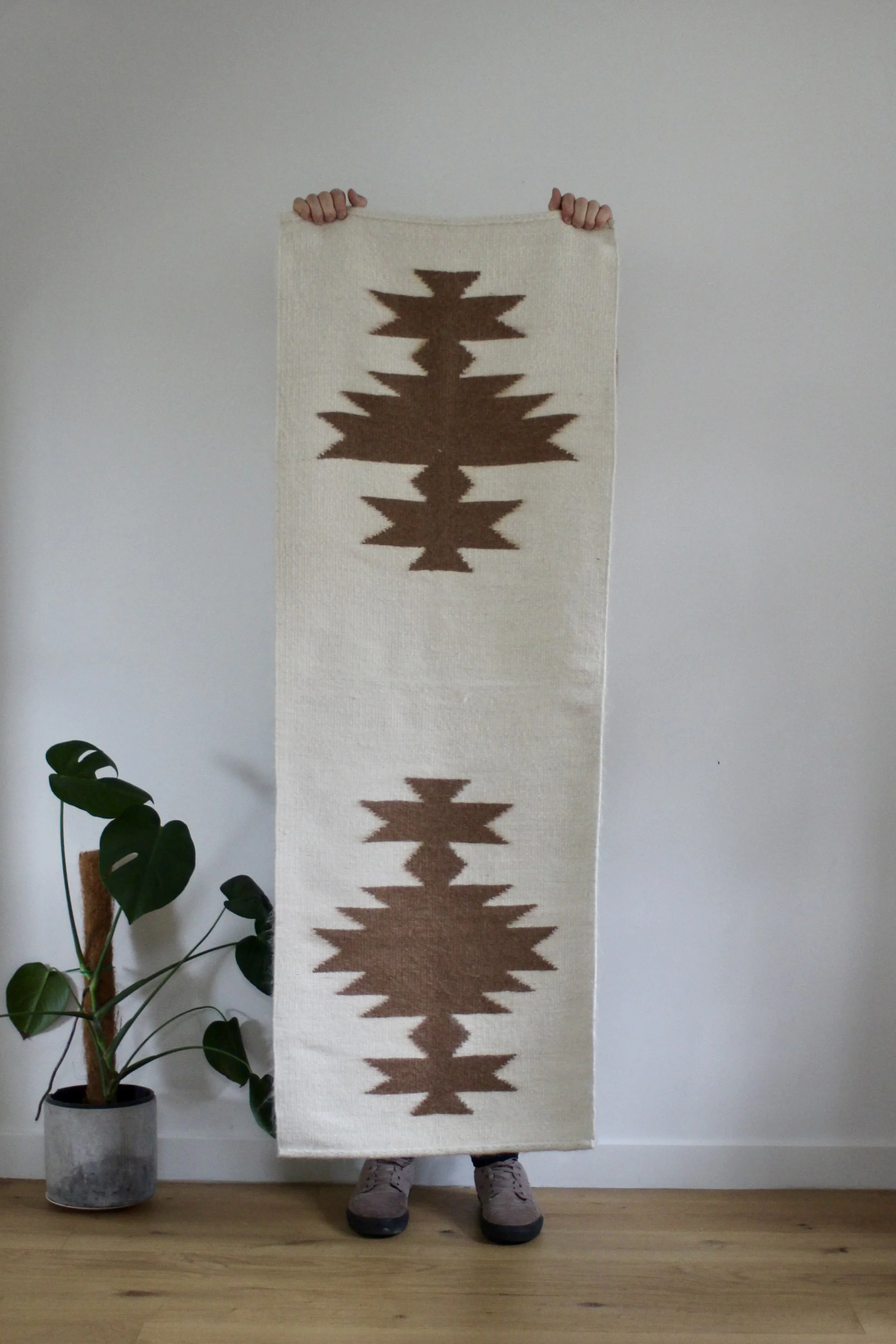
60 × 200 cm approx.
Runner Rug / Tapestry - Natural and Brown
The Sendero collection embodies the idea of a ‘path’—featuring long rugs with a strong presence, ideal for enhancing transitional spaces. Crafted from natural carded wool with a warm brown coya pattern, each piece can be used as a rug or tapestry.
Natural carded wool with brown coya pattern.
100% sheep wool, hand-spun and handwoven on a loom. Naturally dyed.
The Rug Journey
Across the rural roads of Santiago, road signs repeat like a quiet poem: Brea Pozo, Alto Pozo, Blanca Pozo. These names, all ending in pozo, mark parajes where water—scarce and vital—has shaped not just the land, but the rhythm of life. In this landscape, the monte santiagueño survives in a delicate, almost silent balance. And yet, it gives generously. As the Argentinian musician Peteco Carabajal writes:
“The Santiago bushland lives in a fragile state, and yet it gives flowers and herbs ‘full of remedy’, as the people say. Tusca, brea, jarilla—healing plants, flowers that cure.”
“El monte santiagueño vive en estado crítico y sin embargo da flores y hierbas ‘muy remedio’, según el hablar de la gente. Tusca, brea, jarilla, flores y hierbas que curan.”

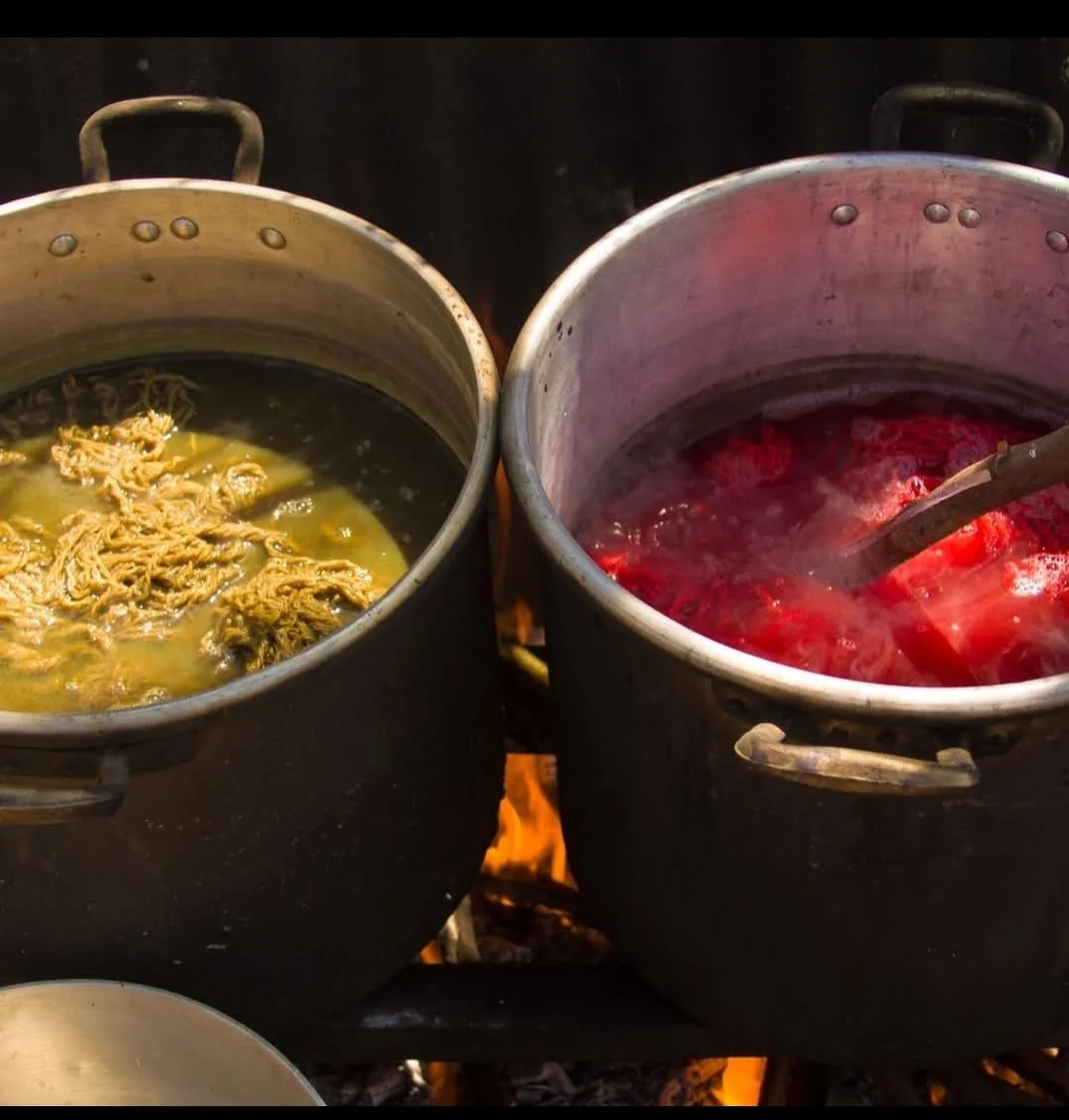
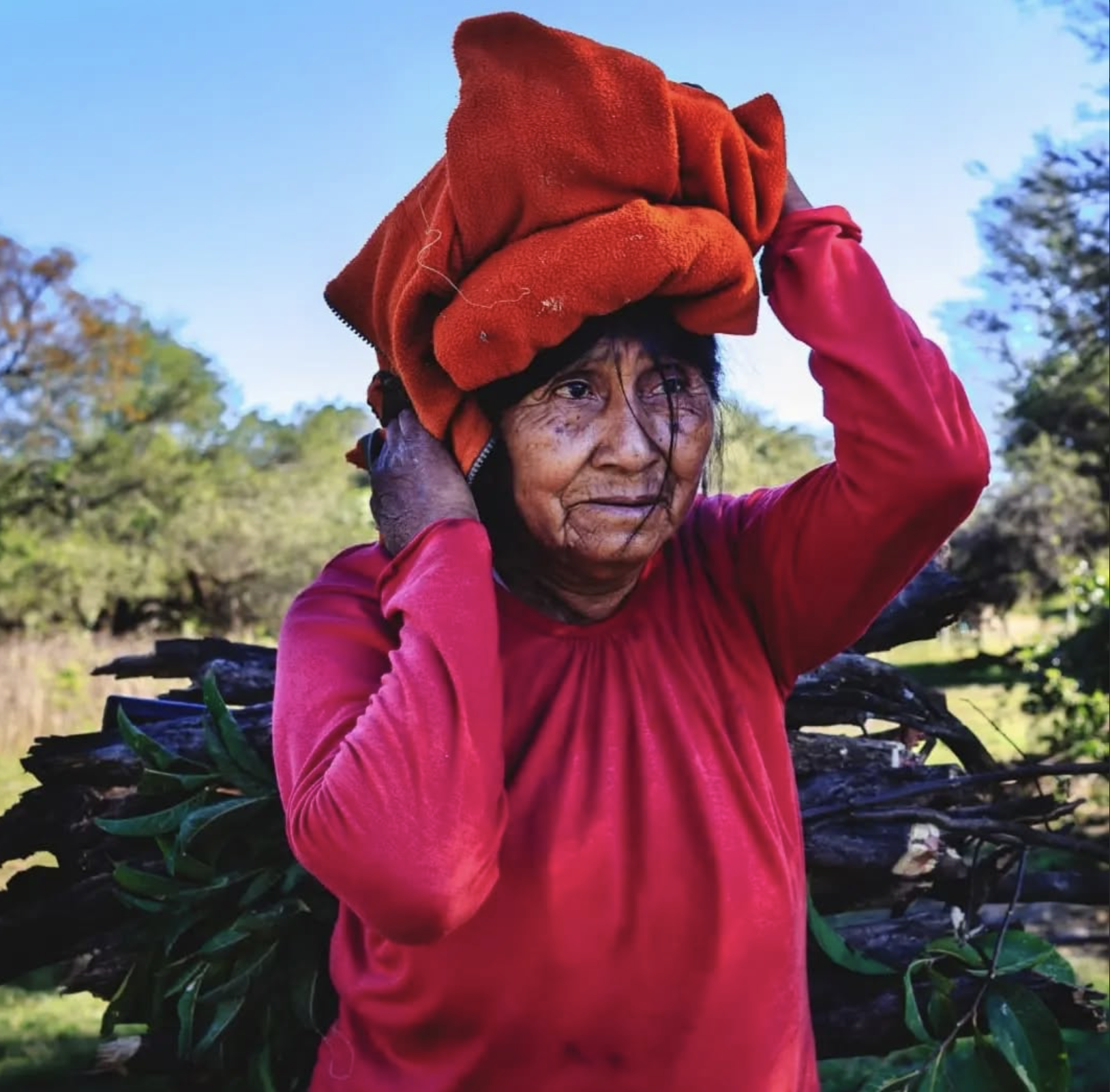
Their craft begins long before the loom. It starts with the sheep, sheared by hand, their wool carefully spun using husosand ruecas into soft, strong thread. Each skein is then washed, twisted, and dyed using ingredients drawn directly from the monte: the grey tones of the Jume root, the golden hues of hollín, the warm terracotta of algorrobo resin mixed with orange dye. The colours of these pieces are never artificial—they’re rooted, organic, seasonal. Subtle shifts in tone reflect changes in harvest, weather, and soil. Every shade carries a story.

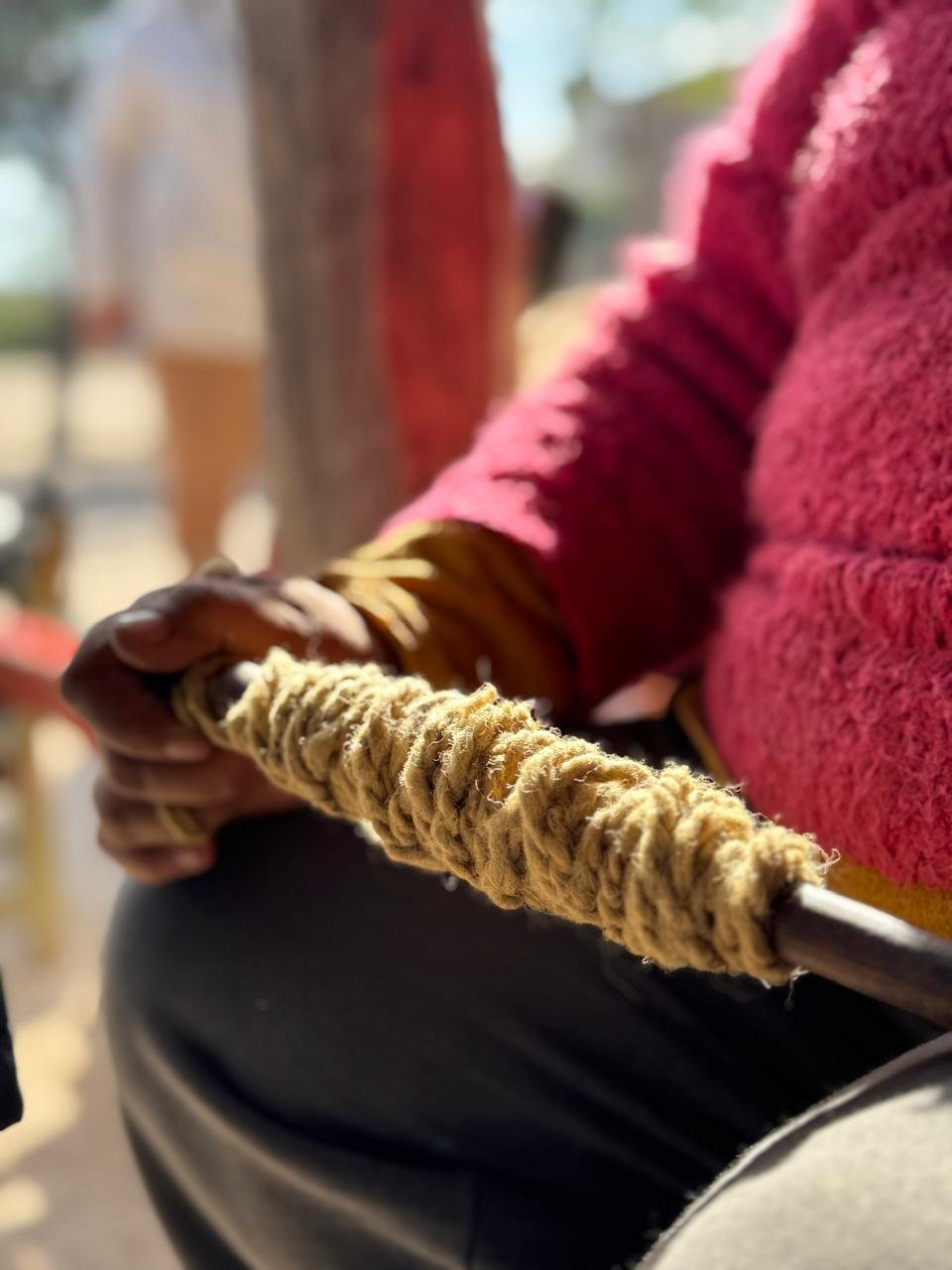
The weaving itself is a slow, meditative process that follows techniques passed down through generations—held in memory, in gesture, in the rhythm of rural life. Using horizontal or circular looms, the teleras create intricate patterns that echo the forms and textures of the land—the bark of native trees, the dry grasses, the soft movement of wind over earth. Each product is one-of-a-kind, shaped not only by the artisan’s hands, but by the tempo of nature.

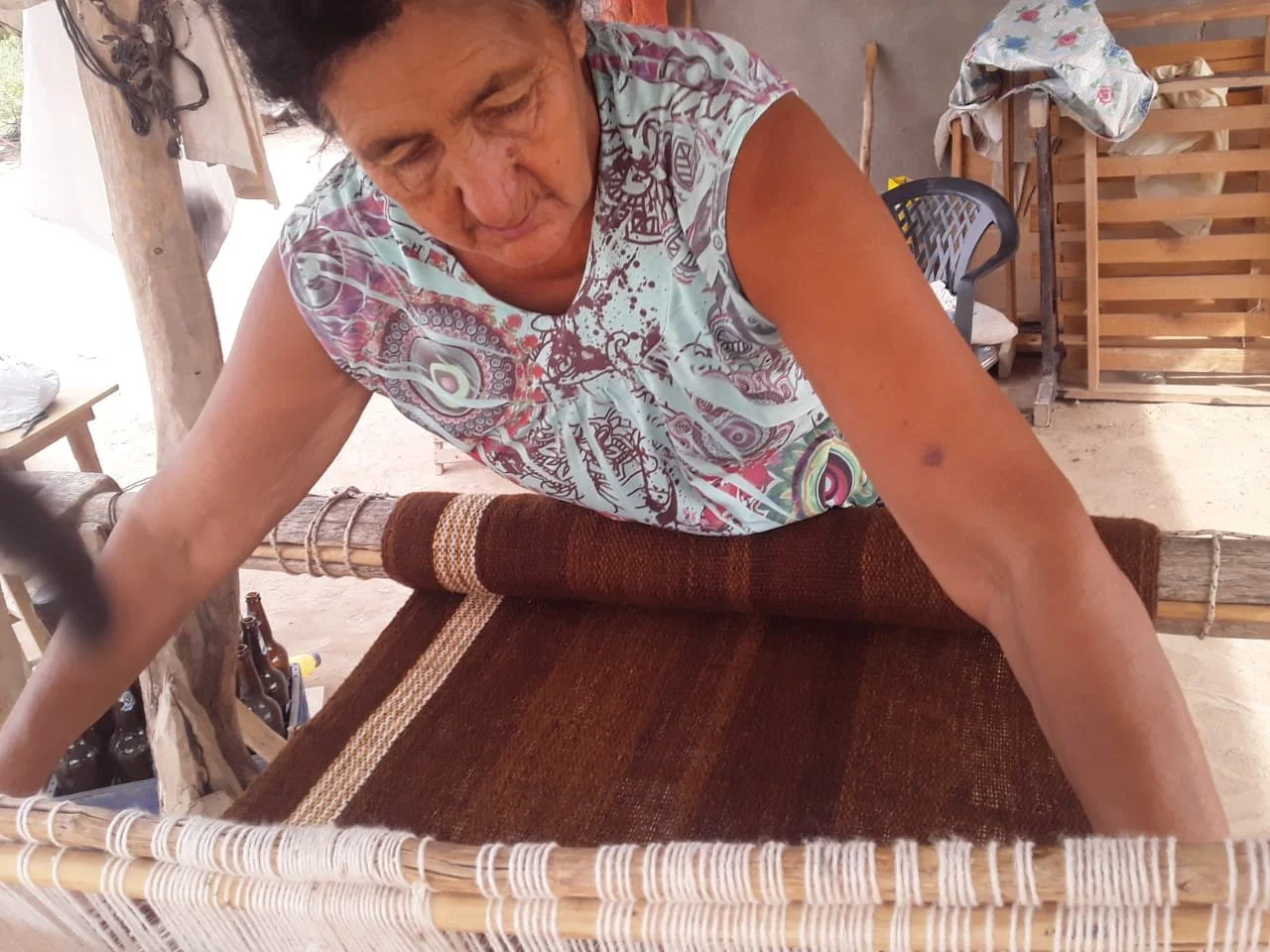
Here, healing comes not only through the hands, but through the land itself. The women known as Huarmi Sachamanta—women of the monte—carry this knowledge as they weave: not only to preserve a craft, but to keep a way of living alive.

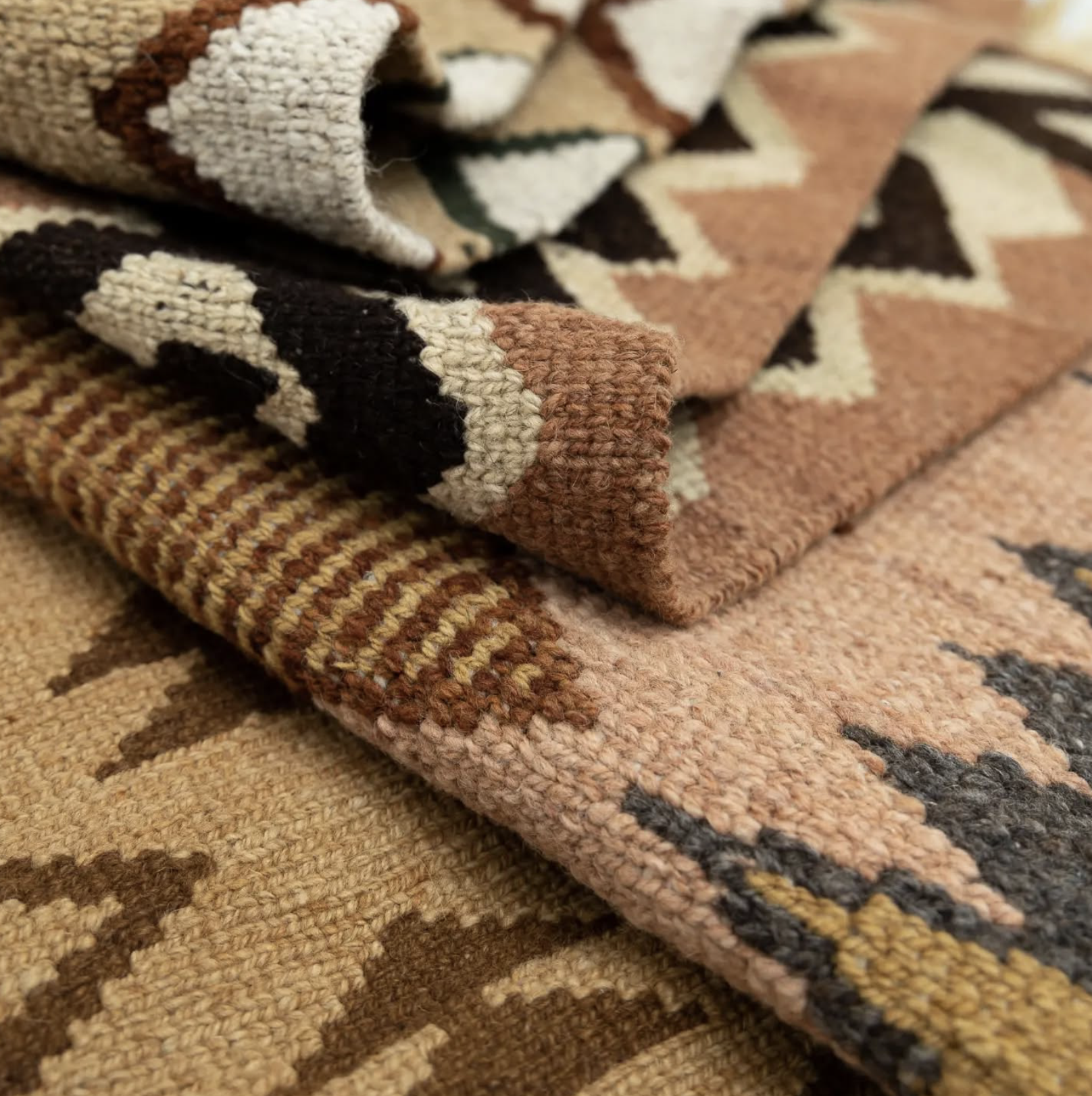
This collection is part of a fair trade initiative and economía solidaria, ensuring that every artisan receives fair, dignified income for their time, skill, and creativity.
These textiles are more than beautiful objects—they’re tactile stories. When you bring one into your home, you honour not only the maker, but the monte, its memory, and its quiet resilience.

A closer look at the artisans preserving ancestral techniques.
Filmed in Majada Sud, San Martín, Santiago del Estero, this video features the voices and work of teleras Emma Rodríguez, Norma Enríquez, and Norma Ramírez (modista), who share their connection to the land, memory, and thread.
This film was created as part of the third edition of “Los Patrimonios son Políticos: Textiles, Vida y Trama”, an event organized by the Secretaría de Patrimonio Cultural del Ministerio de Cultura de la Nación, held in Santiago del Estero on September 15–16, 2022. Interviews were conducted in March, May, and August of the same year.
Want to design your own custom rug?